
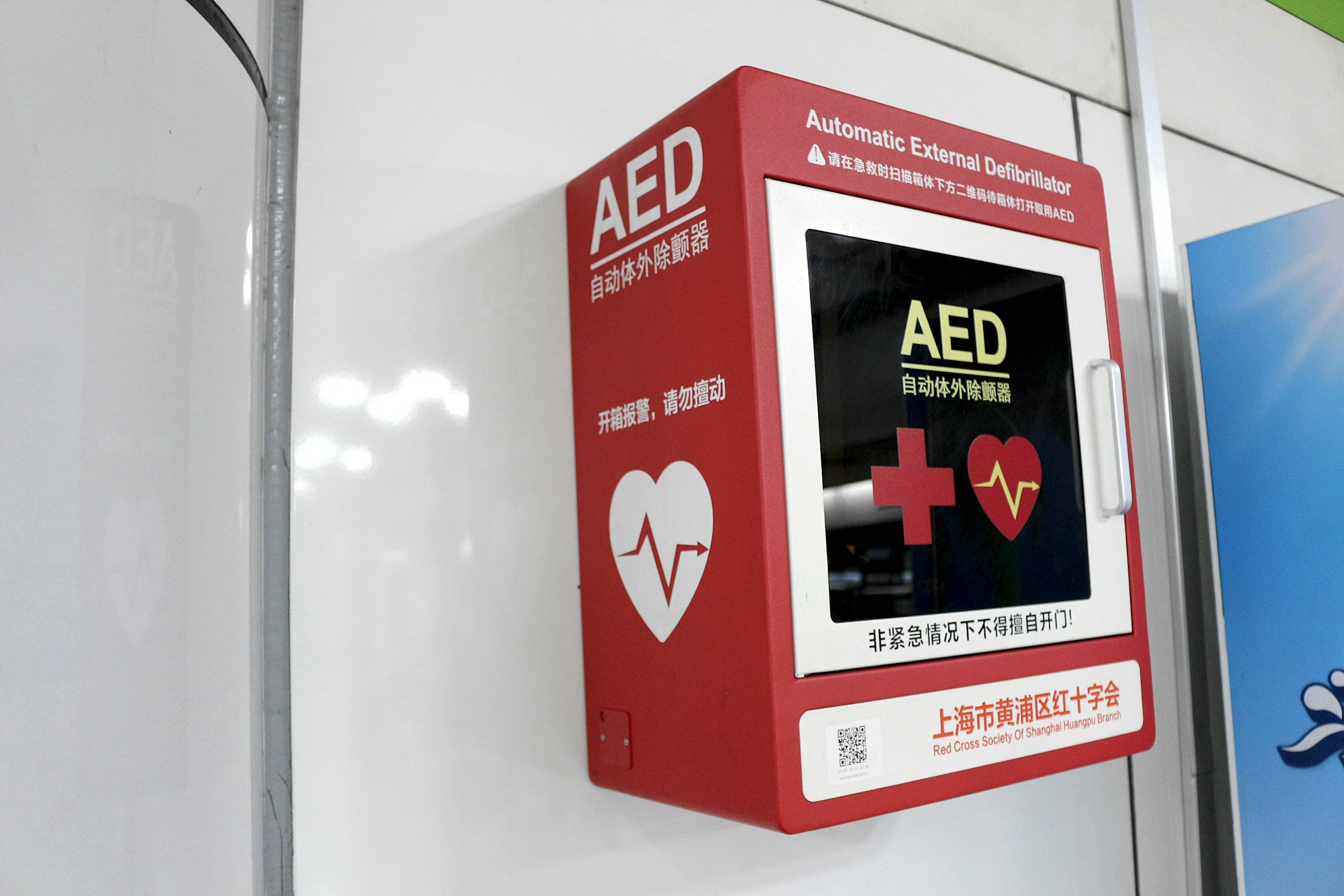
AED Information

Choosing an AED
Choosing the right defibrillator for your situation can be difficult. Our detailed guide provides a detailed breakdown for each of the core providers.

AEDs in Schools
LifeGuard MD, Inc. has certified instructors that will come to your location to train your employees. We offer First Aid, CPR, and AED classes.


AED Requirements
There are federal, state, and certain local requirements for public access AED programs.

AED Program
We have a proprietary AED tracking program that alerts you when it is time to change your battery and/or pads to keep your AED in good working order.


“The current survival rate for sudden cardiac arrest is under 7%. The likelihood of successful resuscitation decreases by about 10% with every minute that passes. It is estimated that 428,000 lives could be saved each year in the U.S. alone with widespread access to defibrillators.”
— American Heart Association
AED Products
-

AEDs & Packages
-

Accessories
-

AED Training
-

Batteries & Pads
-

Carrying Cases
-

Mounting Options
Register an AED
Register an AED

Register your AED(s) for reminders and alerts to keep your lifesaving tools in good working order.
FAQs
Lifeguard MD, Inc. has partnered with MD Solutions International to provide medical authorization and AED program support services. AEDs are classified as medical devices that are regulated by the FDA and a physician’s prescription is required in order to purchase most AEDs. Many states have regulations requiring a Medical Director to oversee and authorize your AED Program. AED Medical Oversight Services include the following elements:
-
The FDA requires a prescription authorizing the purchase and use of most AEDs. MDSI’s physician will provide a prescription authorizing the purchase and use of an AED for each of your facilities.
-
A standard AED Response Protocol will be provided as well as an Incident Report Form. If your organization has developed its own protocol and policy, MDSI can provide a review and approval of your documents.
-
Your state or region may have regulatory requirements that our Physician will sign. MDSI staff will assist CPR Plus in determining if these requirements apply to your sites and completing the registration documentation if required.
-
MDSI’s staff and physicians are available during regular business hours to assist you via telephone and e-mail with your early defibrillation program questions. 24 x 7 MDSI staff telephone support after an AED event.
-
The physician will provide a comprehensive review of the event and provide feedback with a Physician Review Report to meet ongoing quality assurance practices. Responding to a cardiac arrest victim can be an emotional experience. MDSI’s Service Team is available to provide a telephone debriefing for responders to review the incident, provide reassurance and answer questions specific to the event on request.