
How to Build a Nationwide AED Program: From One Office to 100 Locations
Building a national AED program management strategy that scales from a single office to 100 or more locations requires more than just purchasing defibrillators. It demands a comprehensive corporate AED rollout plan, strict compliance with state-specific regulations, and a reliable system for ongoing maintenance. Whether you're a safety officer at a fast-growing company or an executive planning a nationwide safety initiative, scaling your AED program is a mission-critical undertaking that saves lives and protects your organization from liability.
This guide walks through the most essential components of developing a national AED strategy, beginning with internal planning and ending with full-scale deployment and compliance across the United States.
Starting with a Centralized Corporate AED Rollout Plan
Every successful national AED program begins with a centralized, scalable strategy. It is tempting to treat AED deployment like a simple facilities upgrade, but AEDs are regulated medical devices. Your plan must include policies for device placement, staff training, emergency response coordination, and ongoing service contracts.
The first step is determining the risk profile of each location. Offices with high foot traffic, older populations, or remote locations with delayed emergency response times should be prioritized. The next phase is standardization. Select a single AED model to be used across all locations for ease of training, supply management, and maintenance. Then, define internal protocols for installation, signage, and accessibility that comply with ADA and OSHA guidelines.
Coordination with HR and legal teams is crucial during the early phases to ensure the program is integrated with emergency action plans and workplace safety policies. Internal champions at the corporate and local level should be identified to manage and promote the program on an ongoing basis. A robust AED rollout plan is the backbone of any sustainable expansion effort.
Understanding AED Compliance by State
As you begin planning for national deployment, it becomes clear that AED compliance is not uniform. Each U.S. state has its own rules governing AED ownership, placement, registration, training, and maintenance. For instance, some states require AEDs to be registered with local EMS agencies, while others mandate that lay rescuers receive regular CPR and AED training. Certain jurisdictions impose civil penalties for AEDs that are non-functional due to missed maintenance checks.
Navigating these legal nuances is a complex but essential part of national AED program management. Organizations must stay on top of each state’s specific laws and regulations and ensure that every location aligns with local mandates. Failure to do so can expose companies to legal risk and nullify Good Samaritan protections during a sudden cardiac arrest incident.
Some national providers offer compliance monitoring services to alert businesses when regulations change in a given state. Leveraging these services allows safety leaders to maintain compliance while scaling confidently. A legal audit of your compliance plan should be conducted annually to address changes in state laws and emerging best practices.
Coordinating with a Multi-location AED Maintenance Provider
Ongoing AED maintenance is where many nationwide programs break down. AEDs require routine inspections, battery replacements, and pad changes. The intervals for these tasks vary by manufacturer and are also influenced by local legal requirements. Managing this across multiple locations manually is not sustainable.
A multi-location AED maintenance provider can centralize service records, streamline preventive maintenance, and handle equipment tracking and supply fulfillment. These providers often use cloud-based monitoring systems and can dispatch technicians or ship supplies automatically based on expiration timelines.
Incorporating maintenance into your corporate AED rollout plan from the beginning helps ensure long-term sustainability. Choose a provider who offers 24/7 support, a service-level agreement, and nationwide coverage. Consistent maintenance not only ensures compliance but also prevents tragic outcomes due to expired or non-functional devices during an emergency.
Training and Local Engagement
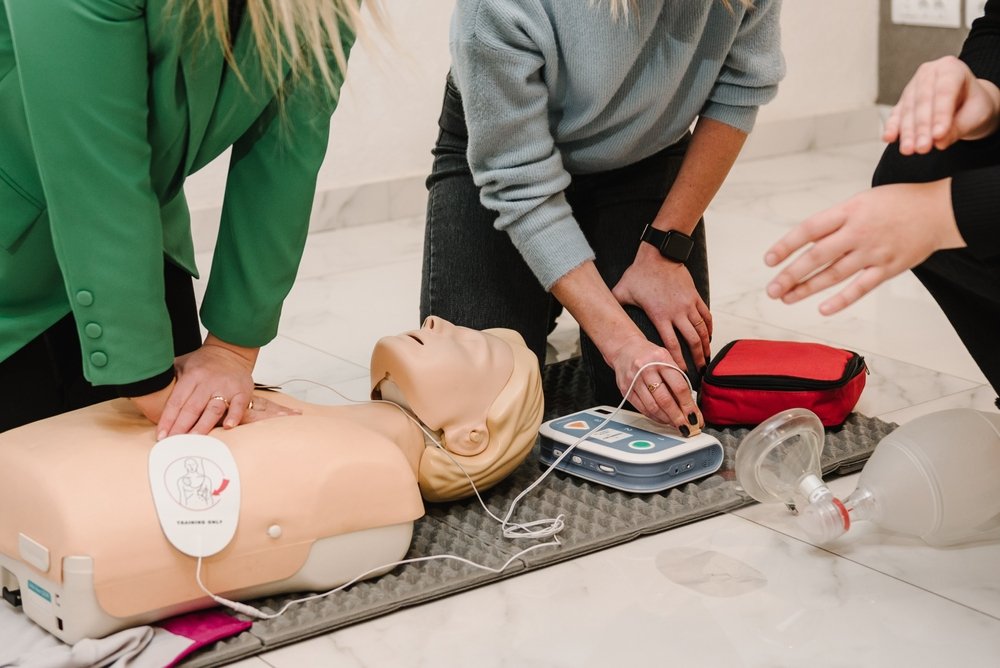
Deploying AEDs without a training program is like handing someone a fire extinguisher without teaching them how to pull the pin. While many modern AEDs are designed to be intuitive, training drastically increases survival rates by reducing hesitation and ensuring correct usage under stress.
All staff at each location should receive CPR and AED training from certified instructors. This training should be repeated every one to two years to comply with certification standards. In states where training is mandatory, documentation must be stored securely and updated regularly.
Beyond training, local engagement is critical. Encourage employees to take ownership of their AED program by appointing AED site coordinators at each location. These coordinators can perform visual inspections, maintain readiness logs, and serve as liaisons with your corporate safety team.
Ongoing engagement can be fostered through safety drills, internal awareness campaigns, and visible signage around the AED units. When people know where the AED is located and feel empowered to use it, your program's impact extends far beyond the device itself.
Scaling Up Across 100 Locations
Once the foundation is in place, scaling your AED program across dozens or even hundreds of sites becomes a matter of process and consistency. Standardized templates for procurement, installation, training, and reporting should be used across all locations. Your rollout timeline can be phased based on site priority or executed in batches regionally.
At this stage, digital tools become indispensable. Use centralized dashboards to track AED locations, maintenance status, compliance reports, and training schedules. This visibility allows for proactive management and minimizes the risk of overlooked devices or lapsed training certifications.
Engage in regular program reviews at the national level to assess performance metrics, identify gaps, and adapt to changes in organizational structure or state legislation. If your company opens or closes locations frequently, ensure your AED assets can be reallocated efficiently to maintain optimal coverage.
As your AED footprint grows, your reputation as a safety-forward organization grows with it. This not only enhances employee morale and customer confidence but also positions your company as a responsible national employer.
Conclusion
Building a national AED program from one office to 100 locations is both a logistical and legal challenge, but one that pays off in lives saved and risks mitigated. A successful corporate AED rollout plan depends on rigorous standardization, knowledge of AED compliance by state, and long-term partnership with a trusted multi-location AED maintenance provider.
Every stage of the process, from initial planning to scaling and maintenance, should be approached with the same level of care you would apply to any other critical infrastructure. AEDs are not just boxes on the wall. They are life-saving devices that depend on planning, compliance, training, and support to deliver on their promise.
With the right foundation, tools, and partners, your organization can create a national AED program management strategy that scales seamlessly, complies with state laws, and above all, protects people. It is not just a safety measure; it is a commitment to human life at every level of your operation.
Will the Next Life We Save Be Yours?
At LifeGuard MD, Inc., we’re passionate about helping you create a safer environment where lives can be protected and saved. Whether you’re ready to equip your facility with high-quality AEDs or schedule professional CPR and AED training for your team, we’re here to guide you every step of the way. Reach out to us today to learn how we can help you strengthen your emergency preparedness and gain the confidence to respond when it matters most. Your safety is our mission; let’s make every second count together!