
Beyond the Sale: Why Ongoing AED Maintenance and Training Save More Lives
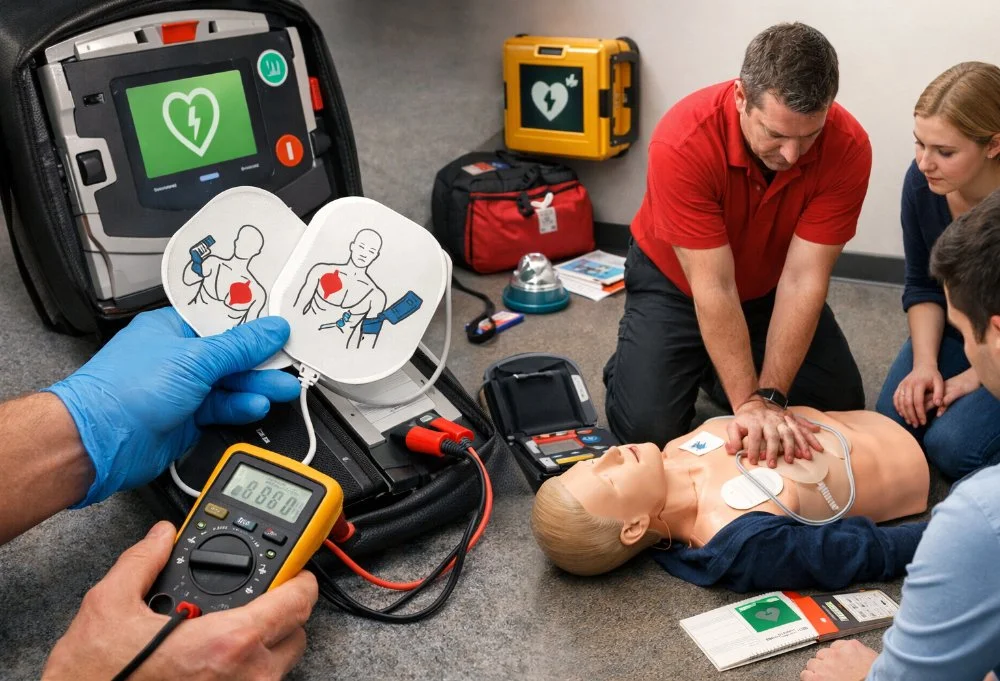
When an organization purchases an Automated External Defibrillator (AED), the commitment to saving lives doesn't end at the point of sale. The reality is that an AED sitting unused on a wall, with outdated pads or a depleted battery, is a device that cannot deliver the life-saving shock when moments matter most. This is why an effective AED maintenance program across the USA has become essential for any organization serious about cardiac emergency preparedness. Beyond the initial investment, ongoing AED tracking and service provider relationships, combined with comprehensive staff training, create a complete safety ecosystem that maximizes the chances of survival during sudden cardiac arrest.
The statistics are sobering yet compelling. Sudden cardiac arrest kills more people each year than breast cancer, prostate cancer, and lung cancer combined. However, the survival rate for cardiac arrest increases dramatically when bystanders use an AED within the first few minutes of collapse. Without proper maintenance and trained staff, that lifesaving device becomes little more than expensive medical equipment gathering dust. Organizations across the country are now recognizing that a full-service AED management nationwide approach is not a luxury but a necessity.
The Critical Role of Regular AED Maintenance
An AED requires consistent monitoring to remain ready for deployment at any moment. Regular maintenance ensures that all components function properly when needed most. The device's pads must be replaced according to manufacturer specifications, typically every one to three years, and the battery must maintain adequate charge capacity. If a device has been used, it requires immediate maintenance and potential replacement of critical components before it can be placed back in service.
Without a structured AED maintenance program, organizations risk deploying a device that won't work during an actual emergency. Expired pads lose their adhesive properties and electrical conductivity, meaning they may fail to deliver a proper shock or not adhere to a patient's skin at all. A depleted battery cannot power the device, leaving staff helpless in the critical moments when someone's life depends on swift action. These aren't theoretical concerns; they represent real failures that have occurred when organizations neglected proper maintenance protocols.
A reliable AED tracking and service provider system creates accountability and ensures nothing falls through the cracks. When an organization partners with a service provider specializing in AED management, trained technicians conduct regular inspections, replace expired supplies, and maintain detailed records. This professional approach eliminates the guesswork and human error that can undermine in-house maintenance efforts. For organizations with multiple devices across different locations, having a single AED tracking and service provider managing all units ensures consistent standards and documentation.
Building Your Full-Service AED Management Nationwide Strategy
Organizations operating across multiple states or regions face unique challenges in maintaining consistent AED readiness. A full-service AED management nationwide provider can standardize your entire program, ensuring that whether your defibrillators are in California, Texas, or New York, they all receive the same rigorous maintenance standards and monitoring protocols.
Comprehensive management services typically include regular device inspections, automatic pad and battery replacement based on expiration dates, immediate response to device usage, compliance documentation, and detailed reporting. Service providers maintain centralized databases tracking every device in your network, their locations, maintenance history, and readiness status. This level of coordination is nearly impossible for most organizations to manage independently, especially as operations grow.
The financial benefits of this approach often surprise organizations. While outsourcing AED management involves upfront costs, it eliminates the expenses associated with device failures, emergency replacements, and potential liability issues. When an AED fails to function due to poor maintenance, organizations face not only the tragedy of a preventable death but also legal and financial consequences. Investing in professional management protects both lives and your organization's future.
The Irreplaceable Value of Comprehensive AED Training
Owning an AED without training nearby staff is like having a fire extinguisher in a building where no one knows how to use it. AED training and upkeep for organizations must encompass everyone who might encounter a cardiac emergency, from front-line employees to security personnel to management. Training removes the fear and uncertainty that often paralyzes bystanders during medical emergencies.
Proper training teaches staff not only how to operate the device but also how to recognize signs of cardiac arrest, how to perform CPR in conjunction with AED use, and how to coordinate with emergency medical services. Organizations that implement regular training programs see significantly higher employee confidence levels and faster response times during actual emergencies. The training also reinforces the importance of maintaining the device and immediately reporting any malfunctions.
Training should be renewed regularly because knowledge degrades over time. Annual refresher courses ensure that staff retain critical skills and remain familiar with the specific devices your organization uses. Some organizations implement blended training approaches, combining in-person instruction with digital learning modules that fit into busy schedules. The key is making training accessible and maintaining momentum so that when an emergency occurs, the trained response is automatic and instinctive.
Creating a Culture of Preparedness
Organizations that succeed in maximizing AED effectiveness view these devices as part of a broader culture of safety and preparedness. This mindset extends beyond the devices themselves to encompass regular emergency drills, clear protocols for accessing and using AEDs, and designated responders who receive specialized training. When leadership communicates that emergency preparedness matters, employees take it seriously.
Visible AED placement combined with clear signage makes devices easy to locate during stressful situations. Staff should know exactly where the nearest AED is located relative to their work areas. Some organizations implement rapid response teams that train certain employees to be first responders during medical emergencies. These teams receive additional training in CPR, AED operation, and emergency coordination. The presence of trained responders significantly improves outcomes because the device is deployed faster and with greater confidence in its operation.
Organizational culture also influences the decision to invest in full-service AED management nationwide systems or AED tracking and service provider relationships. When leadership prioritizes employee and visitor safety, allocating resources for professional management becomes non-negotiable. Conversely, organizations that view AEDs as one-time purchases often discover too late that maintenance and readiness have slipped.
Measuring Success and Ensuring Accountability
Accountability systems ensure that AED maintenance and training initiatives remain on track. Organizations should establish clear metrics including device readiness percentages, training completion rates, and incident response times. Regular audits verify that devices are properly maintained and supplies are current. Service providers can furnish detailed reports documenting their activities, which helps organizations maintain compliance with regulations and standards.
Documentation also proves invaluable if an AED ever needs to be deployed. When an emergency does occur, clear records demonstrate that your organization took reasonable precautions to maintain equipment and train staff. This documentation can be critical if any questions arise about your organization's preparedness or response.
Conclusion
The decision to implement a comprehensive AED maintenance program and ongoing training represents far more than administrative overhead. It reflects a genuine commitment to protecting the lives of employees, customers, and visitors. An effective approach combines regular professional maintenance through a qualified AED tracking and service provider with consistent staff training and organizational culture that prioritizes emergency preparedness. Together, these elements transform an AED from a device on the wall into an active, reliable component of your organization's life-saving capabilities. In the moments when someone's heart stops, that commitment makes all the difference.
Will the Next Life We Save Be Yours?
At LifeGuard MD, Inc., we’re passionate about helping you create a safer environment where lives can be protected and saved. Whether you’re ready to equip your facility with high-quality AEDs or schedule professional CPR and AED training for your team, we’re here to guide you every step of the way. Reach out to us today to learn how we can help you strengthen your emergency preparedness and gain the confidence to respond when it matters most. Your safety is our mission; let’s make every second count together!