
How the New CPR Guidelines Update Choking Response for Adults, Children and Infants
When someone is choking, every second counts. The American Heart Association regularly updates its guidelines to reflect the latest research on emergency response, and the most recent changes to CPR and choking protocols have significant implications for how we respond to airway obstructions across all age groups. Understanding these updated choking CPR guidelines is essential for anyone who wants to be prepared in an emergency situation. Whether you work in healthcare, childcare, or simply want to be a responsible community member, staying informed about the latest AHA choking response recommendations can literally save lives.
The evolution of CPR training choking sequence updates reflects decades of research into what works best when someone cannot breathe. These guidelines apply to adults, children, and infants, though the specific techniques differ based on age and size. In this comprehensive guide, we will explore how the new recommendations have changed emergency response protocols and what you need to know to help someone in distress.
Recognition of Choking: The First Critical Step
The ability to recognize that someone is actually choking is the foundation of effective response. A person who is choking may clutch their throat, be unable to speak or cry, have difficulty breathing, or even lose consciousness. This is distinct from someone who is coughing forcefully, which indicates that some air is moving through the airway and the person should be encouraged to continue coughing.
Updated choking CPR guidelines emphasize the importance of quickly assessing whether a person has a complete airway obstruction or a partial one. If someone can cough, speak, or cry (in infants), they still have some airway patency, and the recommendation is to monitor them closely and seek immediate medical help while encouraging continued coughing. However, if they cannot cough, speak, or breathe effectively, you need to act immediately. The updated protocols stress that you should not waste time trying to determine whether the obstruction is partial or complete; if the person appears to be in distress and cannot cough effectively, you should proceed with rescue techniques. This represents an important shift from earlier guidelines that emphasized waiting to see if the person could dislodge the object themselves.
Adult Choking Response: Abdominal Thrusts and Back Blows
For adults, the AHA choking response recommendations have remained relatively consistent, but training emphasis and technique refinement continue to evolve. The standard approach involves a combination of back blows and abdominal thrusts, also known as the Heimlich maneuver. When you encounter a choking adult, position yourself slightly behind and to the side of the person. Place one foot between their feet for stability, and deliver firm blows to the back between the shoulder blades using the heel of your hand.
If back blows do not dislodge the object, proceed to abdominal thrusts. Stand behind the person and place your fist slightly above the navel and below the ribcage. Grasp your fist with your other hand and deliver quick, upward thrusts with enough force to generate air pressure in the lungs. These CPR training choking sequence updates emphasize the importance of alternating between back blows and abdominal thrusts, repeating the cycle until the object is dislodged or emergency services arrive. If the person becomes unconscious, you should begin CPR, as this may help dislodge the object and restore circulation.
Children and Infant Choking First Aid Training Updates
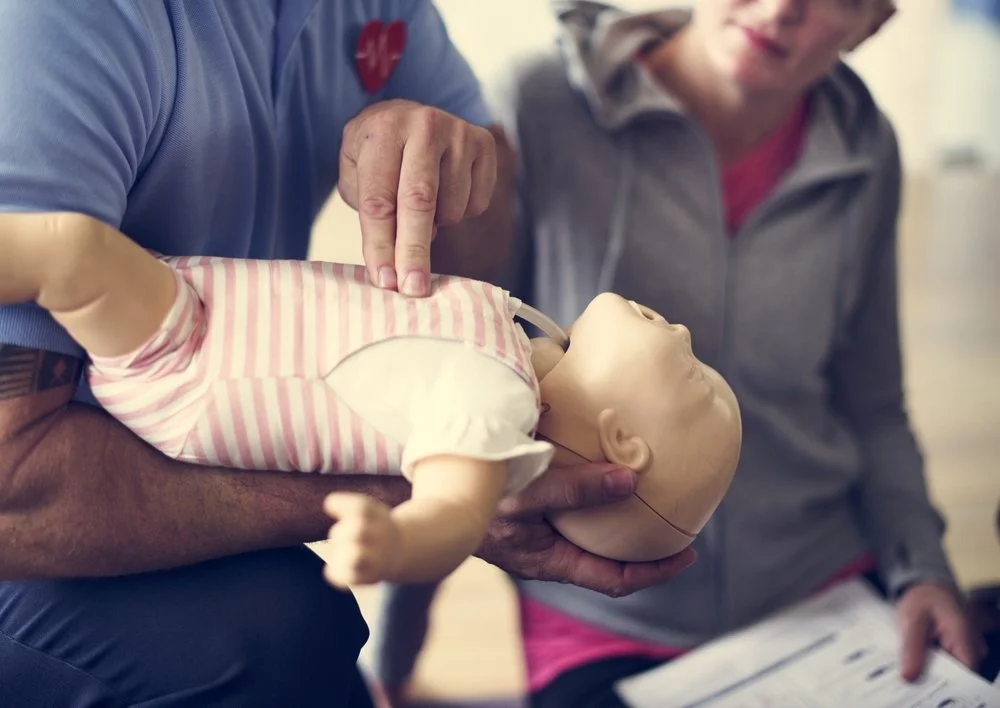
Infant choking first aid training has seen significant updates in recent years, reflecting research into the safest and most effective techniques for the youngest patients. The updated guidelines now recommend back blows and chest thrusts for infants rather than abdominal thrusts. This is because an infant's abdominal organs are more fragile and vulnerable to injury. When responding to a choking infant, position the baby along your forearm, supporting the jaw with your thumb and fingers while keeping the head lower than the body.
Deliver five sharp back blows between the shoulder blades using the heel of your hand. If this does not dislodge the object, flip the infant onto their back while supporting the head and deliver five chest thrusts using two fingers in the middle of the chest, just below the nipple line. These infant choking first aid training recommendations require proper technique and confidence, which is why hands-on CPR training is so valuable.
For children between ages one and eight, the approach shifts somewhat. Back blows and abdominal thrusts become appropriate, similar to adult technique but with modifications for the child's size. Many updated choking CPR guidelines recommend teaching caregivers and healthcare providers how to adjust the force and hand placement based on the child's age and size. The key principle is applying enough force to generate airway pressure without causing injury. Unlike infants, children's organs are more developed, making abdominal thrusts safer and more effective.
Recognition of Aspiration and Partial Obstruction
One of the most important updates in recent CPR training choking sequence updates involves better recognition of aspiration, which occurs when food or foreign objects enter the airway but do not cause a complete blockage. Some parents and caregivers wonder whether they should seek medical attention if the child coughs up the offending object themselves. The answer is yes. Even if a child successfully coughs up food or an object, medical evaluation is important because small fragments may remain in the airway or lungs.
The updated AHA choking response recommendations now emphasize that any suspected aspiration warrants emergency medical evaluation. This is a significant shift from older advice that suggested watching and waiting. Research has shown that delayed diagnosis of aspiration can lead to serious complications, including pneumonia and chronic respiratory issues. If a child has a sudden coughing episode or seems to have trouble breathing after eating or playing with small objects, seeking immediate medical attention is the safest course of action.
Special Considerations for Pregnant Women and Obese Individuals
Recent updates to CPR training choking sequence updates have also addressed special populations. For pregnant women, the recommended technique for abdominal thrusts is modified to use chest thrusts instead, performed at the base of the breastbone to avoid compressing the abdomen. For individuals with obesity, extended reach and proper hand placement become important considerations. These modifications reflect the commitment of medical organizations to ensure that guidance is applicable across diverse body types and medical conditions.
When to Call Emergency Services
Throughout any choking rescue, timing and proper emergency response are critical. If you are alone with a choking person, call 911 or your local emergency number before initiating rescue techniques, or immediately after delivering the first round of back blows and thrusts. The updated choking CPR guidelines emphasize that emergency services should be summoned quickly, as professional rescuers may need to intervene with specialized equipment if basic measures fail.
Conclusion
The updated choking CPR guidelines represent our growing understanding of how to effectively and safely respond to airway obstruction across all age groups. From recognizing the signs of choking to performing age-appropriate rescue techniques, these AHA choking response recommendations provide a framework for potentially life-saving intervention. Whether it is infant choking first aid training or understanding CPR training choking sequence updates, staying current with these guidelines through regular refresher courses ensures you can respond confidently and effectively in an emergency.
Will the Next Life We Save Be Yours?
At LifeGuard MD, Inc., we’re passionate about helping you create a safer environment where lives can be protected and saved. Whether you’re ready to equip your facility with high-quality AEDs or schedule professional CPR and AED training for your team, we’re here to guide you every step of the way. Reach out to us today to learn how we can help you strengthen your emergency preparedness and gain the confidence to respond when it matters most. Your safety is our mission; let’s make every second count together!