
Strategic AED Placement: Where to Install Defibrillators in Your Facility to Save Lives
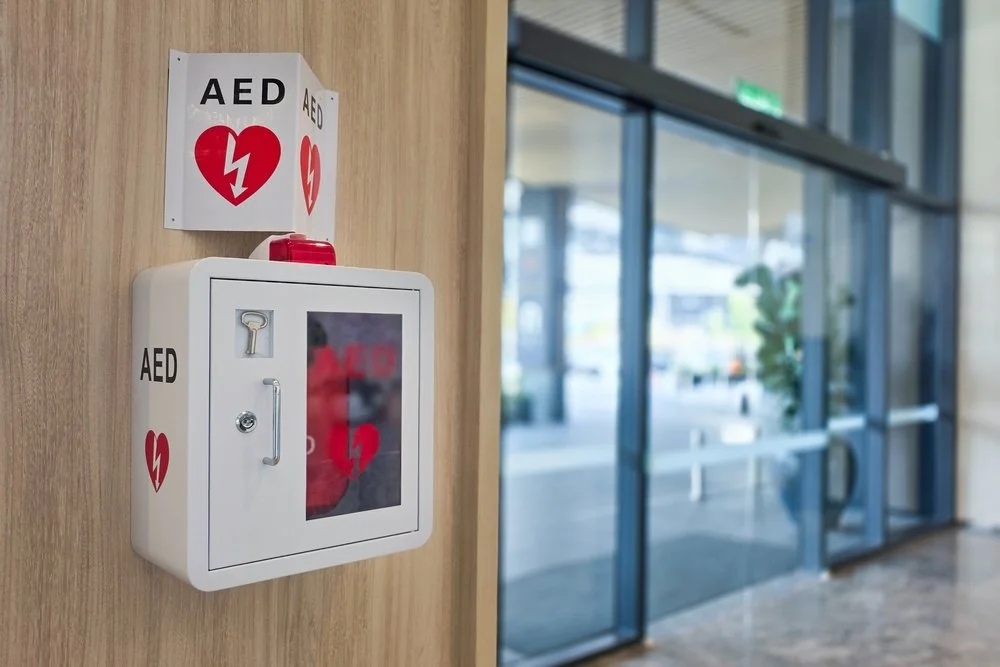
Every second matters during a sudden cardiac arrest, especially in busy workplaces where people may be spread across multiple floors, departments, or buildings. For businesses in Omaha, having an automated external defibrillator (AED) is only part of the equation. Placing it in the right location can significantly improve response time during a medical emergency.
Quick Answer
Strategic AED placement means installing automated external defibrillators in highly visible, easily accessible locations where they can be reached and used within three minutes of a cardiac emergency. Facilities in Omaha should evaluate building size, occupancy, foot traffic, and potential hazards to determine the best locations while ensuring staff know where every AED is located.
What Local Readers Should Know
AEDs should be placed where they can be accessed quickly from any occupied area of your facility.
Large commercial buildings, warehouses, schools, healthcare offices, and manufacturing facilities often require multiple AEDs to reduce response times.
Businesses throughout Douglas County should consider building layout, employee count, and visitor traffic when developing an AED placement strategy.
Clearly marked AED cabinets, routine inspections, and employee training are just as important as the device itself.
Seasonal events, community gatherings, and large public spaces around Omaha may temporarily require additional AED accessibility.
Why This Matters Locally
Strategic AED placement is especially important in Omaha because businesses range from multi-story office buildings downtown to large manufacturing facilities, healthcare campuses, schools, warehouses, and retail centers throughout Douglas County and nearby communities like Bellevue, Papillion, La Vista, Ralston, and Council Bluffs. Each type of facility presents different challenges for emergency response.
Traffic congestion, large campuses, secure access areas, and expansive industrial buildings can increase the time it takes emergency responders to reach a victim. Having AEDs positioned throughout a facility helps bridge those critical first minutes before emergency medical services arrive.
LifeGuard MD, Inc. helps organizations evaluate their facilities and develop AED programs designed to improve emergency preparedness. After this first introduction, we focus on helping businesses identify practical solutions that fit their specific environment.
Local Data or Field Observations
According to the American Heart Association, immediate CPR combined with rapid defibrillation offers the best chance of survival for many sudden cardiac arrest victims. Survival rates decrease significantly with every minute defibrillation is delayed.
From our experience working with commercial facilities, one of the most common challenges is discovering that an AED is technically available but located too far away to be useful during an emergency. Large facilities often benefit from multiple devices placed throughout the property rather than relying on a single centrally located unit.
Local Impact
Poor AED placement can create unnecessary delays during emergencies. Employees may know an AED exists but spend valuable time searching for it or traveling across a large building.
This becomes even more important in facilities such as:
Manufacturing plants
Distribution centers
Office complexes
Educational campuses
Fitness centers
Churches
Hotels
Community centers
Facilities near Eppley Airfield, the Old Market, West Omaha business parks, or expanding commercial developments may experience high visitor volumes, making visible AED placement even more valuable.
Warning Signs Your Facility May Need Better AED Placement
Strategic AED placement may need improvement if:
Your building has only one AED despite multiple floors or large square footage.
Employees are unsure where the nearest AED is located.
AED cabinets are hidden inside locked offices or storage rooms.
Visitors cannot easily identify AED locations.
Recent renovations changed building traffic patterns.
Your workforce has grown significantly.
High-risk work areas are located far from existing AEDs.
No formal AED placement assessment has been performed.
When to Call a Professional
A professional AED assessment is appropriate whenever your facility undergoes expansion, remodeling, changes in occupancy, or significant staffing increases.
Business owners can periodically verify that cabinets remain visible, signage is intact, and inspection schedules are followed. However, determining optimal placement often requires evaluating walking distances, occupancy patterns, emergency response planning, and applicable workplace safety considerations.
Common Local Causes of Poor AED Placement
1. Facility Growth
Many Omaha businesses expand over time while leaving the original AED in its initial location.
2. Building Renovations
Office remodels, warehouse additions, and departmental relocations can unintentionally increase travel time to an AED.
3. Multiple Occupancy Areas
Facilities with conference rooms, production floors, cafeterias, fitness areas, or separate entrances often require more than one device.
4. Limited Visibility
AEDs installed inside offices, break rooms, or behind reception desks may be difficult for visitors or employees to locate during an emergency.
5. Lack of Emergency Planning
Some organizations purchase an AED to meet preparedness goals but never develop a comprehensive placement strategy.
Prevention and Maintenance
An effective AED program includes both proper placement and ongoing maintenance.
Best practices include:
Position AEDs in highly visible public areas.
Install standardized emergency signage.
Keep devices unlocked unless security requirements dictate otherwise.
Inspect AEDs according to manufacturer recommendations.
Replace batteries and electrode pads before expiration.
Conduct periodic emergency drills.
Train employees on CPR and AED use.
Review AED locations annually as facilities change.
Expected Results
Organizations that strategically place AEDs create a faster emergency response process. Employees spend less time searching for equipment, emergency teams can begin treatment sooner, and overall preparedness improves.
Professional assessments also help businesses identify coverage gaps, improve compliance with internal safety policies, and build employee confidence during emergencies.
Common Mistakes
Mistake: Installing only one AED for an entire facility.
Consequence: Response times increase in larger buildings.
Better Approach: Evaluate travel distance and install additional units where necessary.
Mistake: Hiding the AED to prevent theft.
Consequence: Employees waste valuable time locating the device.
Better Approach: Install visible cabinets with clear signage.
Mistake: Forgetting maintenance.
Consequence: Batteries or pads may expire without anyone noticing.
Better Approach: Establish routine inspection schedules and assign responsibility.
Mistake: Assuming everyone knows the AED location.
Consequence: Confusion delays emergency response.
Better Approach: Include AED locations in employee orientation and regular safety training.
Common Local Scenario
A growing Omaha warehouse installs an AED near the main office when operations begin. Several years later, the facility doubles in size, adding production lines and shipping areas. During a safety review, management realizes employees working in the newest section would need several minutes to retrieve the existing AED. Adding strategically placed units throughout the facility significantly improves emergency readiness.
Related Service Solutions
A complete workplace AED program often includes:
Facility AED placement assessments
AED sales and installation
Program management
Device inspections
Battery and pad replacement scheduling
CPR and AED training
Emergency response planning
Compliance documentation assistance
Learn how a professional AED assessment can help improve emergency preparedness
Comparing Your Options
Option Advantages Limitations Single centrally located AED Lower initial investment Longer response times in larger facilities Multiple strategically placed AEDs Faster access across the facility Higher initial equipment cost Professional placement assessment Customized recommendations based on building layout Requires an initial evaluation Self-selected placement Quick installation May overlook response time challenges
Service Areas
We proudly serve businesses throughout Omaha as well as Bellevue, Papillion, La Vista, Ralston, Council Bluffs, and surrounding communities across the greater Omaha metropolitan area. Our goal is helping organizations improve emergency preparedness with practical AED solutions tailored to their facilities.
Cost of Ignoring the Issue
Waiting to evaluate AED placement can leave critical coverage gaps unnoticed. Even organizations that already own an AED may discover that employees cannot reach it quickly enough during an emergency. Reviewing placement before an incident occurs helps reduce unnecessary delays and strengthens your overall emergency response plan.
Schedule an AED placement evaluation
Frequently Asked Questions
Where should an AED be installed in an Omaha business?
The best location is a highly visible, easily accessible area that allows responders to retrieve the AED within approximately three minutes. Larger facilities throughout Omaha often require multiple devices to achieve this goal.
How many AEDs does my facility need?
The answer depends on building size, occupancy, walking distance, and facility layout. Warehouses, schools, healthcare facilities, and multi-story office buildings frequently benefit from more than one AED.
Should AEDs be installed in locked cabinets?
Generally, AEDs should remain readily accessible during emergencies. If security concerns require controlled access, emergency response procedures should minimize delays.
Do Omaha businesses need employee AED training?
Yes. Although AEDs provide voice prompts that guide users, CPR and AED training helps employees respond more confidently during an emergency.
How often should AEDs be inspected?
Most manufacturers recommend regular visual inspections along with scheduled maintenance for batteries and electrode pads. Following the manufacturer's maintenance guidelines helps keep devices ready for use.
Can multiple buildings share one AED?
Sharing one AED across separate buildings may increase response times. Facilities with multiple structures should evaluate each building individually to determine appropriate coverage.
What types of Omaha facilities benefit most from multiple AEDs?
Manufacturing plants, schools, office campuses, healthcare facilities, fitness centers, warehouses, hotels, churches, and large retail locations often benefit from strategically distributed AEDs.
Can a professional evaluate our current AED locations?
Yes. A facility assessment can identify coverage gaps, recommend additional device locations, and improve overall emergency preparedness based on your building's unique layout.
Closing
Strategic AED placement is one of the most effective ways to improve emergency preparedness within your facility. Taking time to evaluate accessibility, response times, and building layout helps ensure lifesaving equipment is available when every second counts.
Protect Your Facility with a Smarter AED Strategy
Our team helps businesses throughout Omaha develop practical AED placement plans that improve emergency readiness and support workplace safety.