
Which Comes First—CPR or an AED?
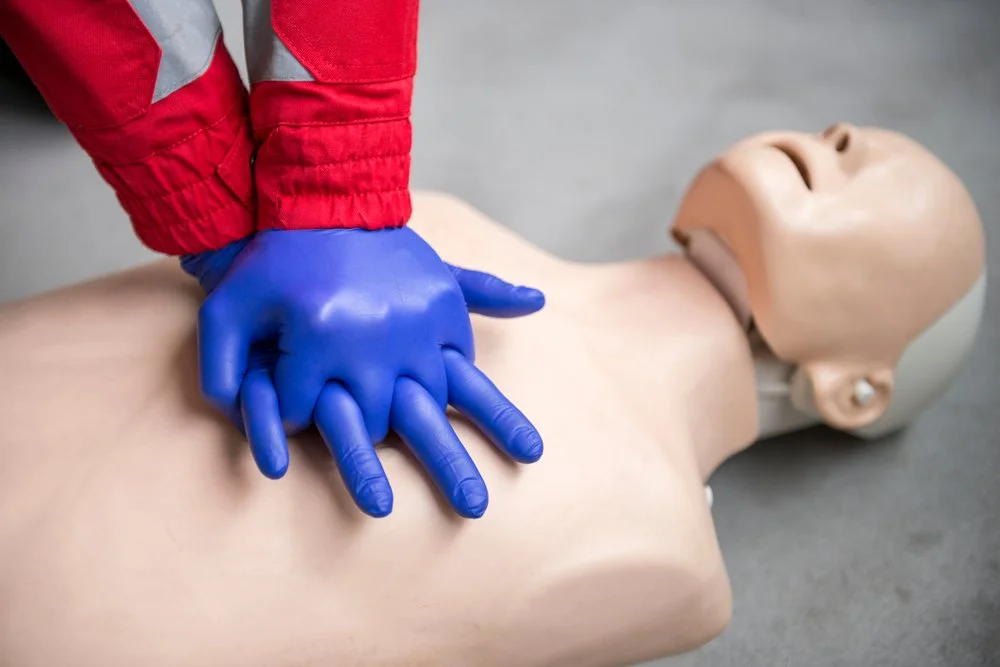
When someone suddenly collapses at an Omaha workplace, school, gym, church, or community event, there is no time to debate whether CPR or an AED should come first. Knowing the correct sequence can help bystanders act instead of losing valuable time.
Quick answer: Call 911 and start CPR immediately if a person is unresponsive and not breathing normally or is only gasping. Have another person retrieve an automated external defibrillator, or AED, if one is available. Continue CPR until the AED arrives, then turn it on and follow its prompts. The goal is not to choose CPR instead of an AED. It is to begin CPR without delay and use the AED as soon as possible.
What Omaha Residents Should Know
Start CPR immediately when a person is unresponsive and not breathing normally or is only gasping.
If another person is present, have that person call 911 and retrieve an AED while you begin CPR.
AEDs may be available in workplaces, schools, gyms, government facilities, and other public buildings throughout the Omaha area.
Continue CPR while the AED is being retrieved, minimizing interruptions once it arrives.
Follow the AED's prompts and resume CPR immediately when instructed.
Which Comes First, CPR or an AED?
CPR comes first if an AED is not immediately at hand, but an AED should be used as soon as it becomes available. For a suspected cardiac arrest, activate emergency medical services and begin CPR rather than leaving the person without care while searching for a device.
If multiple people are available, the response can happen simultaneously. One person can begin CPR while another calls 911 and retrieves the nearest AED.
Once the AED arrives, turn it on and follow its instructions. The device will tell rescuers when to stop touching the person for rhythm analysis and whether a shock is advised. Resume CPR when the device tells you to do so.
Why Does the CPR and AED Sequence Matter in Omaha?
The CPR and AED sequence matters in Omaha because cardiac arrest can happen wherever people live, work, exercise, learn, worship, or gather. A fast, organized response can help keep blood circulating while an AED is being retrieved and emergency medical professionals are on the way.
That applies throughout Douglas County, from Downtown Omaha and Midtown to Millard, West Omaha, and communities near Boys Town. It also matters for employers and organizations serving people from Bellevue, Ralston, Papillion, and La Vista.
LifeGuard MD, Inc. serves the Omaha area, and we believe emergency preparedness works best when people understand both the equipment and the response sequence before an emergency occurs.
What Do Current CPR and AED Guidelines Say?
Current American Heart Association and American Red Cross guidance emphasizes immediate CPR and AED use as soon as the device becomes available. For an unresponsive person who is not breathing normally or is only gasping, rescuers should activate 911, begin CPR, and get an AED.
For adults receiving chest compressions, current guidance calls for compressions at a rate of 100 to 120 per minute. An AED should then be turned on and its voice or visual prompts followed.
The key lesson for Omaha workplaces and public facilities is simple: CPR and defibrillation are complementary parts of the response, not competing choices.
What Should You Do If an AED Is Across the Building?
If an AED is not within immediate reach, begin CPR rather than delaying care while you retrieve it yourself. When another bystander is available, send that person for the AED while you continue compressions.
This distinction matters in larger Omaha facilities such as office buildings, warehouses, schools, churches, recreation facilities, and multi-floor commercial properties. An AED may technically be on site but still take time to reach.
Organizations should consider whether employees know where their AED is located and how to reach it quickly.
What Are the Warning Signs of Cardiac Arrest?
Cardiac arrest should be suspected when someone suddenly becomes unresponsive and is not breathing normally or is only gasping. Recognizing these signs quickly helps bystanders move from uncertainty to action.
Warning signs can include:
Sudden collapse
No response when the person is tapped or spoken to
No normal breathing
Gasping or abnormal breathing
Sudden loss of consciousness
No purposeful movement
Cardiac arrest is different from a heart attack. A person having a heart attack may remain conscious and breathing, while cardiac arrest means the heart is no longer effectively pumping blood.
When Should Someone Call 911?
Call 911 immediately when a person is unresponsive and not breathing normally or is only gasping. Activating Omaha-area emergency medical services is a critical part of the response and should occur alongside CPR and AED retrieval whenever enough people are available.
If you are alone, use a mobile phone on speaker when practical so the emergency dispatcher can provide instructions while you respond. If other people are nearby, assign tasks clearly instead of making a general request for someone to get help.
How Should an AED Be Used During CPR?
Use the AED as soon as it arrives, following the device's spoken or visual instructions and minimizing interruptions in CPR. Modern AEDs are designed to analyze the person's heart rhythm and determine whether a shock is appropriate.
A typical response includes:
Turn on the AED.
Expose the person's chest as directed.
Attach the pads according to the diagrams.
Make sure no one is touching the person during rhythm analysis.
Deliver a shock if the AED instructs you to do so.
Resume CPR immediately when instructed.
Continue following the AED and 911 dispatcher's directions until emergency responders take over.
The AED analyzes the rhythm. The rescuer does not have to decide independently whether a shock is appropriate.
What Common CPR and AED Mistakes Should Omaha Organizations Avoid?
The most common CPR and AED mistakes involve hesitation, poor preparation, and unnecessary delays. A better approach is to establish clear emergency procedures before an incident occurs.
Mistake: Waiting for the AED before starting CPR.
Consequence: The person receives no chest compressions while someone searches for equipment.
Better approach: Start CPR and have another person retrieve the AED whenever possible.
Mistake: Nobody knows where the AED is located.
Consequence: Valuable response time may be spent searching the building.
Better approach: Keep the device accessible and make its location familiar to staff.
Mistake: Being afraid to turn on the AED.
Consequence: A potentially useful device remains unused.
Better approach: Turn it on and follow its prompts.
Mistake: Assuming only medical professionals can use an AED.
Consequence: Bystanders may hesitate during an emergency.
Better approach: Understand that AEDs are designed to guide users through the response.
What Is a Common Omaha Workplace Scenario?
A common Omaha workplace scenario involves one employee collapsing while several coworkers are nearby, allowing CPR, the 911 call, and AED retrieval to happen almost simultaneously. This is where prior preparation can make the response much more organized.
One coworker can begin CPR. Another can call 911. A third can retrieve the AED. Once the AED arrives, rescuers follow its prompts while continuing CPR as directed.
This is a hypothetical local scenario, not a LifeGuard MD, Inc. customer case study.
How Can Omaha Organizations Prepare Before an Emergency?
Omaha organizations can prepare by making AED access, employee awareness, emergency procedures, and CPR/AED training part of their safety planning. Equipment is most useful when people know where it is and what to do when an emergency occurs.
We can help local organizations explore AED and emergency preparedness solutions appropriate for their setting.
Learn more about CPR and AED preparedness options for your Omaha organization
Is CPR Training Better Than Simply Having an AED?
CPR training and AED access address different parts of the same emergency, so organizations should think about preparedness as a coordinated system rather than an either-or choice. CPR provides immediate support while an AED can analyze the heart rhythm and deliver a shock when indicated.
Training can also help people recognize cardiac arrest, assign tasks, perform compressions, retrieve equipment, and follow AED prompts with greater familiarity.
For Omaha employers, schools, churches, fitness facilities, and other organizations, the practical goal is to reduce uncertainty before an emergency happens.
Where Does LifeGuard MD, Inc. Serve?
We serve organizations in Omaha and the surrounding area with emergency preparedness needs. Local readers may include businesses and organizations in Douglas County as well as nearby communities such as Ralston, Bellevue, Papillion, and La Vista.
What Can Happen If CPR or AED Use Is Delayed?
Delaying CPR or AED use means losing time during a medical emergency in which rapid action matters. Rather than waiting for a medical professional to arrive before doing anything, bystanders should call 911, begin appropriate CPR, and use an available AED according to its prompts.
For local organizations, preparation can reduce confusion about who calls for help, who starts CPR, and who retrieves the device.
Review your Omaha facility's AED readiness before an emergency puts the plan to the test
FAQ
Should I do CPR before using an AED in Omaha?
Yes, begin CPR immediately if an unresponsive person is not breathing normally or is only gasping and the AED is not already ready to use. Have someone else retrieve the AED whenever possible. Once it arrives, turn it on, follow its prompts, and resume CPR whenever instructed.
Should I leave someone to find an AED?
Do not unnecessarily delay CPR while searching for an AED. If other people are present, send someone else to retrieve the device while CPR begins. This approach is especially relevant in larger Omaha offices, schools, warehouses, churches, and recreation facilities where an AED may be some distance away.
Can an untrained person use an AED?
Yes, AEDs are designed so members of the public can follow their voice or visual instructions. The device analyzes the heart rhythm and determines whether a shock is advised. Formal CPR and AED training can improve familiarity and preparedness, but lack of certification should not prevent someone from responding in an emergency.
How fast should CPR compressions be?
For adult CPR, chest compressions should generally be delivered at a rate of 100 to 120 compressions per minute. Follow current CPR training guidance and instructions from the 911 dispatcher. Omaha organizations can reinforce these skills through appropriate CPR and AED preparedness training.
Are CPR and an AED the same thing?
No, CPR and an AED perform different roles during cardiac arrest. CPR helps circulate blood through chest compressions, while an AED analyzes the heart rhythm and can deliver a shock when appropriate. The emergency response combines the two by starting CPR quickly and using an AED as soon as possible.
Where should Omaha businesses keep an AED?
An AED should be kept where it is visible, accessible, and capable of being retrieved quickly during an emergency. The appropriate location depends on the building's size, layout, occupancy, and operations. Omaha employers should also make sure employees know the device's location instead of discovering it during an emergency.
Does an AED always shock someone?
No, an AED only advises a shock when its analysis identifies a rhythm for which defibrillation is appropriate. If a shock is not advised, the device will direct rescuers to continue CPR as appropriate. This automated analysis is one reason bystanders should not hesitate to turn on an available AED.
Should Omaha workplaces practice their CPR and AED response?
Yes, reviewing the response can help employees understand their roles before an emergency occurs. Omaha workplaces can identify who will call 911, where the AED is stored, how it will be retrieved, and how responders can continue CPR while the device is being brought to the scene.
Be Ready to Act When Seconds Matter in Omaha
Knowing the order removes a major source of hesitation: call 911, start CPR immediately, and use an AED as soon as it is available. We can help Omaha-area organizations strengthen their AED and emergency preparedness so employees have a clearer plan when an emergency occurs.